Türkçe
 English
 فارسی
 اللغة العربية
 Deutsch
 Français
 русский язык

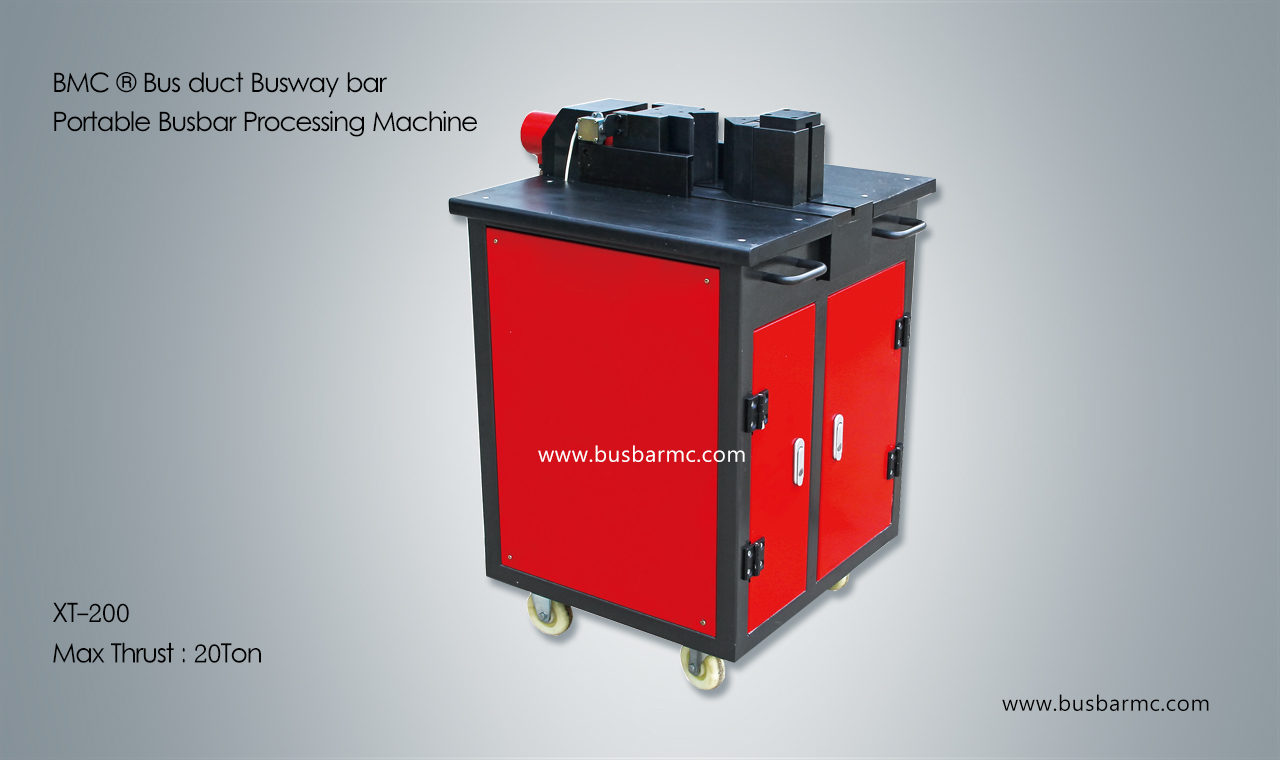
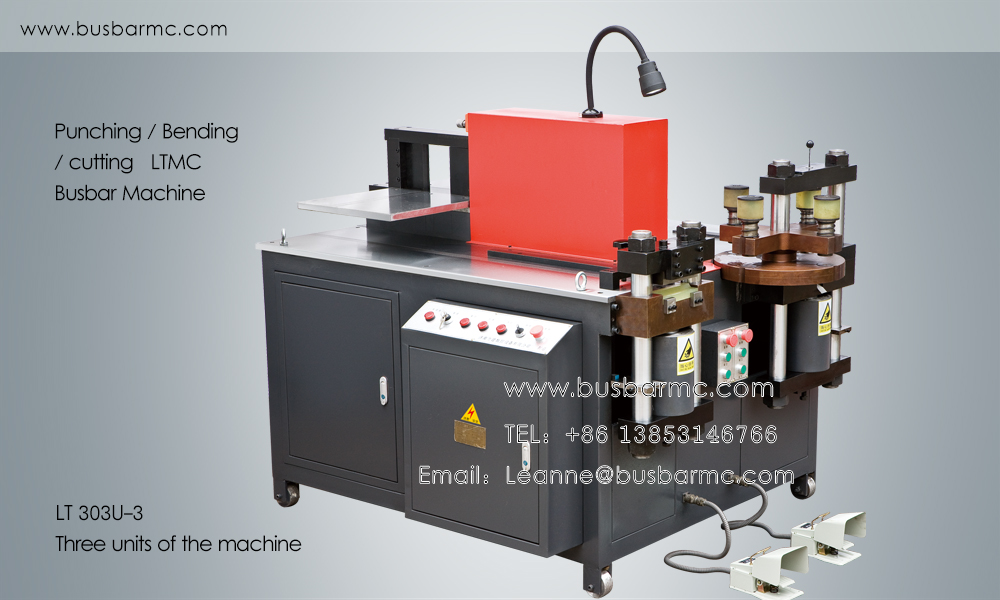
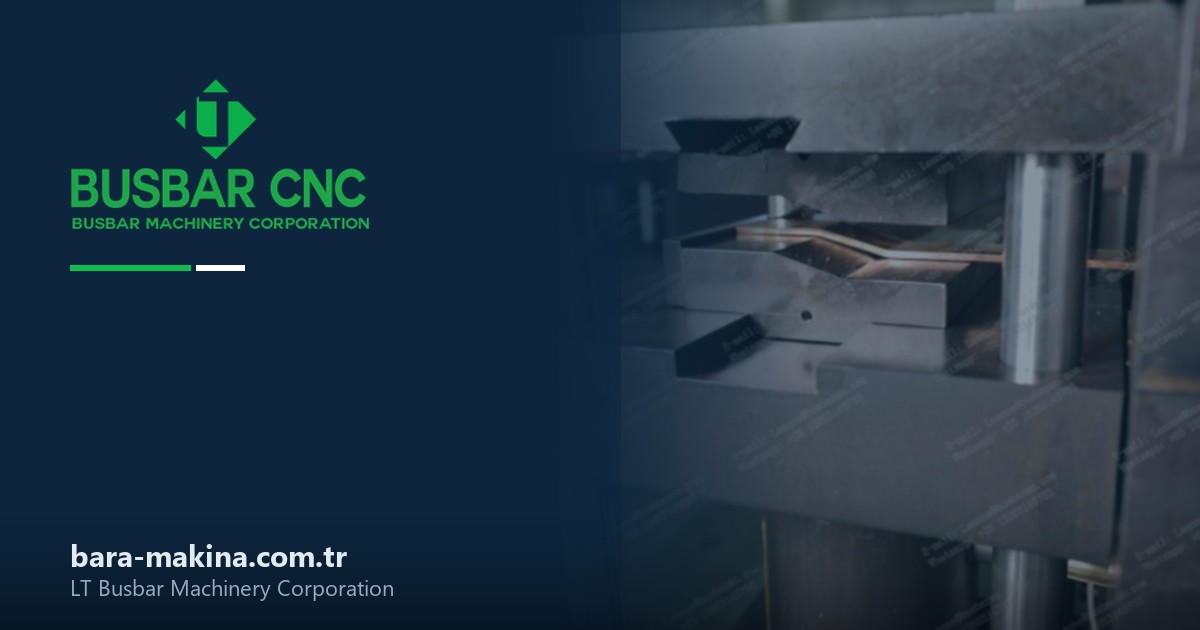
A busbar bending machine forms flat copper or aluminum bars to a target angle with hydraulic force, driving a bend punch into a bend die under angle control. The mechanical cycle is clamp, bend and release. Final accuracy depends on four things: die radius, the thickness and width the station can accept, springback compensation for the material, and correct foot switch timing. On a three station machine the bending station is one of three hydraulic units, but it can also stand alone as a dedicated bender.
The bending cycle in four stages
- Positioning: the operator seats the bar on the worktable against the stops, with the bend line aligned to the die centre.
- Clamping and approach: the punch advances until it contacts the bar and the material starts to yield.
- Forming: the punch travels to the programmed depth or angle, and the bar takes the shape of the punch and die pair.
- Release and measure: the ram returns, the bar springs back, and the operator measures the angle before the next part.
The fourth stage is where most production problems appear. A bend that looks correct under load will open slightly once the punch retracts, because the material recovers elastically. That recovery is springback, and it is not a defect. It is a material property that the controller has to compensate for.
Why springback has to be compensated
When the punch releases, the outer fibres of the bar are still in tension and the inner fibres still in compression. The bar relaxes toward a slightly larger radius, so the free angle is always a little wider than the loaded angle. The controller compensates by over-bending: it drives the punch past the target angle by an amount that the material will give back. Get the compensation wrong and every part sits outside tolerance, no matter how good the tooling is.
Aluminum needs more compensation than copper at the same thickness, and harder tempers need more than soft ones. This is why a copper program copied onto aluminum usually produces an open angle. Keep a separate compensation value per material, per thickness and per die radius, and record it against the part number so the next batch starts from a proven value instead of a guess.
Flat bends and edge bends
| Bend type | How the bar is oriented | Typical use | Capacity note |
|---|---|---|---|
| Flat (horizontal) bend | Bar lies flat, bend runs across the width | Panel busbars, L and Z offsets | Uses the full published width and thickness |
| Edge (vertical) bend | Bar stands on edge, bend runs across the thickness | Tight cabinet spaces, vertical risers | Smaller envelope than flat bend on the same machine |
| U bend | Two bends forming a channel | Busbar routing around components | Needs die clearance for both legs |
| Twist or offset | Bar rotated about its axis | Connecting bars in different planes | Usually an optional die set, not standard |
The distinction matters at the quotation stage. A machine rated for 200 by 16 mm flat bend will not form a 200 by 16 mm edge bend. Read the vertical bend line in the capacity table as a separate number, and do not assume it scales with the flat rating.
Die selection
The die sets the inside radius, and the inside radius sets the bend allowance that appears on the flat pattern. Standard sets commonly cover radii from about 3 mm to 10 mm, plus a large radius die for wide sweeps and a U die for channel shapes. If the drawing calls for an inside radius that is smaller than the material thickness, the bar will crack on the outside of the bend regardless of machine force.
Close bends are the other constraint. When two bend lines sit closer than roughly 40 mm, the second bend can collide with the die that formed the first. That is an engineering question, not an operator question, so raise it before the job is quoted rather than at the machine.
Operating sequence for a repeatable part
- Confirm the material, thickness and target angle, and select the die that matches the drawing radius.
- Enter the bend program: mode, segment lengths, thickness and angle. Use a stored program if the part has run before.
- Run one trial bend and measure the free angle with a digital protractor or angle gauge.
- Adjust the compensation until the measured angle matches the drawing, then save the value against the material.
- Run the first production part and check angle and leg length together, not angle alone.
- Record the settings on the job traveler so the next shift can repeat the part without re-tuning.
Safety points that are specific to bending
The hazard in bending is the closing die, not the rotating tool. Keep hands outside the die throat for the whole stroke, use the foot switch rather than a hand control so both hands stay free, and never reach in to adjust a bar while the hydraulic system is pressurised. Before any die change, isolate the machine and release residual pressure. A die that is still under load can move when the retaining bolt is loosened.
Frequently asked questions
What angle accuracy can a busbar bending machine hold?
Published figures for industrial machines are commonly around plus or minus 1 degree for the set angle, with repeatability around plus or minus 0.5 degree on the same part. Both numbers assume a proven compensation value and a stable material batch.
Can one machine bend both copper and aluminum?
Yes, with separate springback tables. The machine does not care about the material, but the compensation value does. Aluminum also needs a larger minimum inside radius for the same thickness to avoid cracking.
Why does my bend angle drift during a batch?
The usual causes are a warming hydraulic system, a die that has shifted, or a change in material temper between bars. Check the die clamp first, then the oil temperature, then the incoming material.
Is a CNC controller necessary for bending?
For repeated parts it pays for itself, because it stores the angle, the compensation and the bend sequence. For one-off or repair work a manual machine with a mechanical stop is enough, but the operator has to measure and correct every part.